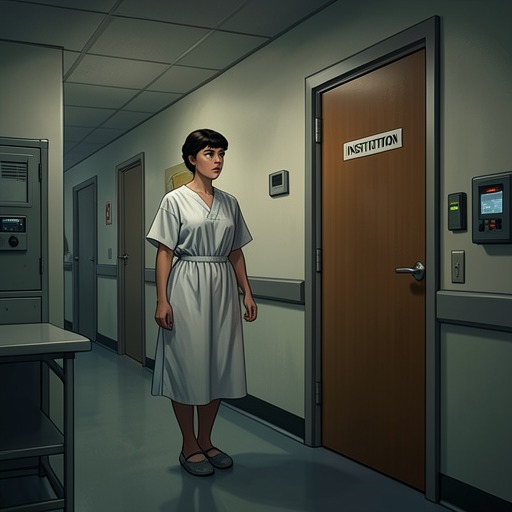
Esther's Flight from Home by Bus
The Bell JarEsther’s Flight from Home by Bus is Esther Greenwood’s attempted escape from home toward Chicago, an act of urgent self-direction that ends instead in confinement and a traumatic first electroconvulsive treatment. The missed chance to leave and the treatment that follows make the episode a sharp reversal: Esther tries to control where she will go, only to find herself subject to decisions and procedures made by others.
The Escape Plan
The morning she is due at Walton, Esther sees a narrow opportunity to run away before it is too late. She counts the money in her pocketbook: one dollar and seventy-nine cents in bills and coins. Chicago is her intended destination, but she does not know the fare and is unwilling to withdraw all her money from the bank, fearing that Doctor Gordon may have warned the clerk to stop her if she makes an obvious move.
Hitchhiking occurs to her, but she cannot work out which roads lead from Boston to Chicago. Her difficulty is not simply a lack of directions: she says that maps are hard to use when she is in the middle of somewhere, and she is poor at judging east and west. She settles on a more deliberate plan: walk to the bus terminal, ask the fare, and then withdraw exactly that amount from the bank so that the transaction will attract less suspicion.
The Bus and the Reversal
At the terminal, Esther browses colored tour leaflets and schedules before realizing that the bank in her home town is already closed. It is mid-afternoon, and she cannot get the money until the next day; her appointment at Walton is set for ten o’clock. Her plan has run into both practical limits and a deadline.
A bus announcement then changes the direction of the scene. Through the loudspeaker’s static and indistinct syllables, Esther hears the name of a stop two blocks from her house. She hurries out into the hot, dusty end-of-July afternoon and boards the red bus while its motor is running. She hands the driver her fare, and the door folds shut behind her. The departure is decisive, but it does not fulfill the plan she has been making: she has boarded a bus whose announced stop is close to home, rather than securing the money and route needed to reach Chicago.
Hospitalization and Treatment
The attempted flight leads into Doctor Gordon’s private hospital, where Esther lies down on a bed and is prepared for electroconvulsive treatment. Doctor Gordon fits metal plates to either side of her head and straps them in place; Esther is given a wire to bite. The account focuses on the physical procedure and her terror as the treatment begins: a violent shaking, shrill noise, blue flashes, and jolts that make her fear her bones will break.
The aftermath is disorienting rather than reassuring. Esther finds herself sitting in a wicker chair with a small glass of tomato juice. Her watch has been returned but fastened upside down, and the hairpins in her hair feel unfamiliar. These details make the treatment’s effects legible through altered objects and bodily confusion, while her question about what terrible thing she has done registers her fear and bewilderment.
Consequences and Significance
Later, Esther tells Doctor Nolan about the machine, the blue flashes, the jolting, and the noise. Doctor Nolan becomes very still and says that the treatment was a mistake and was not supposed to be like that. Her response confirms that Esther’s first experience was not presented as an inevitable feature of treatment: the scene distinguishes the procedure she endured under Doctor Gordon from the care she later receives under Doctor Nolan.
That distinction becomes concrete when Doctor Nolan accompanies Esther through the hospital’s basement tunnels to the Electrotherapy room. Esther hesitates at the door, then says, “Let's get it over with,” and enters. Miss Huey speaks soothingly, applies salve to Esther’s temples, fits the electric buttons, and tells her she will be all right and will not feel a thing. Esther bites down on the object placed on her tongue, and darkness overtakes her. The contrast does not erase the earlier trauma, but it shows a later treatment framed by explanation, accompaniment, and a different response to Esther’s fear.
The bus episode is therefore more than a failed journey. Its sequence runs from a practical effort to evade the appointment, through an impulsive departure, to a treatment that leaves Esther frightened and disoriented. The closed bus door marks a moment of action, but the hospital scene exposes how little control that action secures: the attempt to choose a destination gives way to an institutional course whose procedures and consequences Esther must endure.